Technology Decisions · Display Technology
Interactive Display vs Traditional Presentation Setup
5 min read
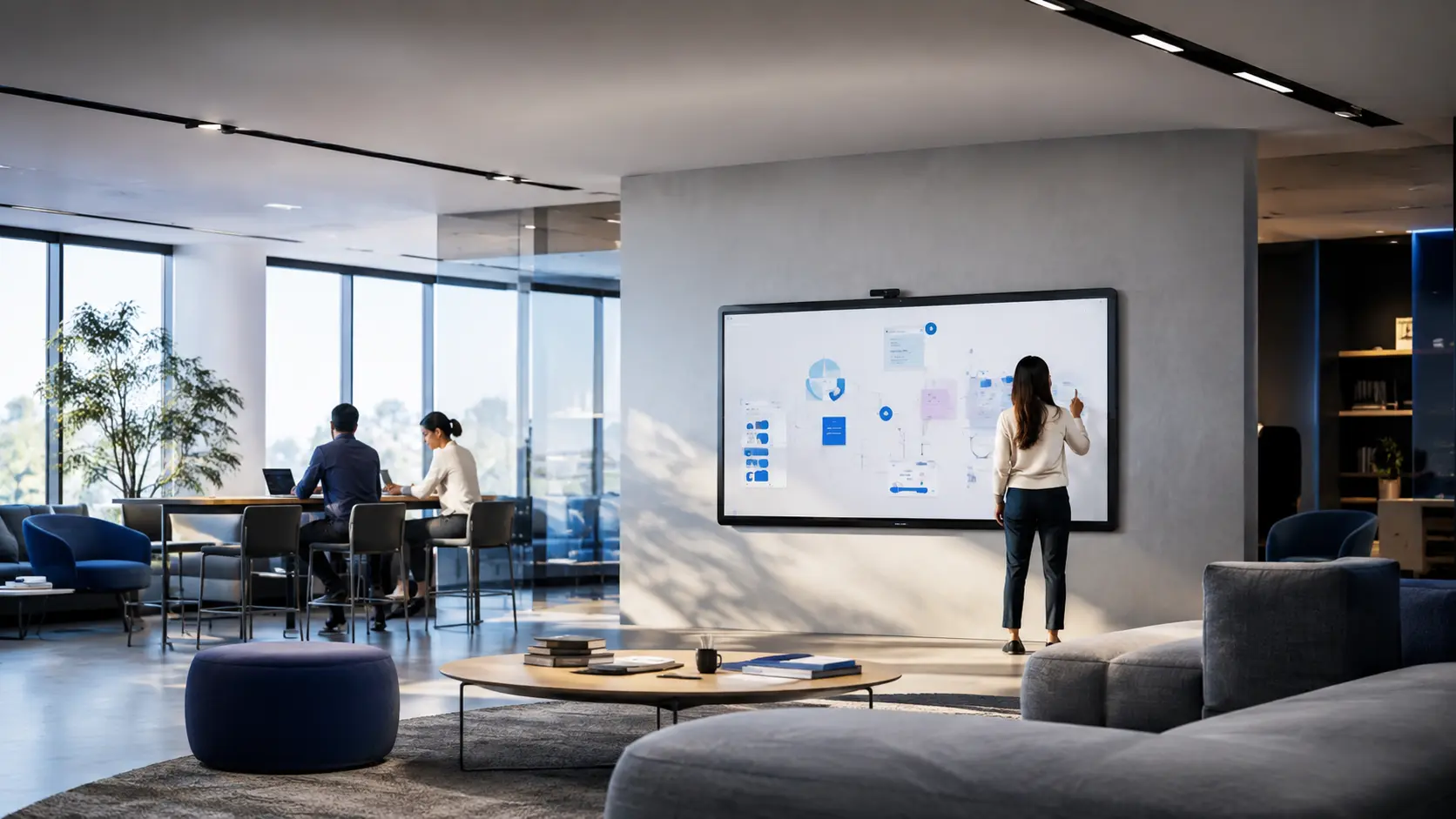
Interactive flat panels are frequently specified for rooms that only ever present slides. The panel works, but nothing about the session changes — and the organisation concludes that interactive technology does not deliver value.
Ask what happens to the content afterwards
The strongest case for an interactive panel is continuity: work created in the room is saved, shared and continued later. If sessions do not produce content, a well-specified passive display is the better choice.
Interactive rooms need different ergonomics
Walk-up use changes mounting height, circulation space, lighting and furniture. Installing a panel at presentation height in a room with a fixed table produces a screen nobody touches.
Hybrid participation is the deciding factor
If remote participants must contribute to the canvas, the panel has to be integrated with the room camera, audio and meeting platform. Treated as a standalone device, it excludes exactly the people it should include.