Meeting & Collaboration
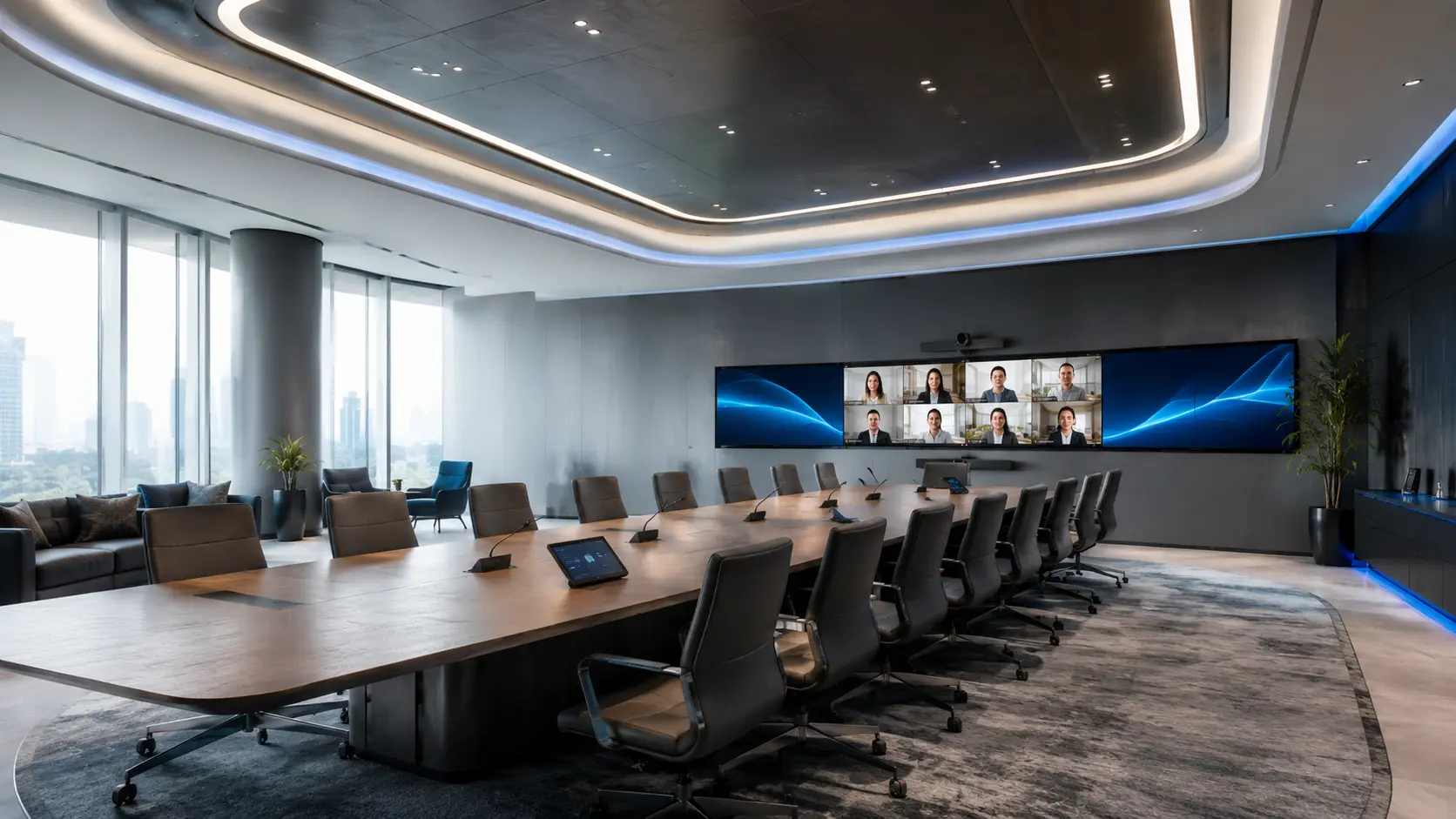
Hybrid meetings where remote participants are equals.
We integrate video collaboration and unified communication into the workplace so distributed teams meet with the same clarity as people in the room.
The business problem
Hybrid meetings fail in the room, not in the platform.
Collaboration platforms are usually well adopted on laptops and poorly supported in shared spaces. When the room contributes poor audio, awkward framing or an inconsistent join experience, remote participants disengage.
- Remote attendees cannot follow who is speaking.
- Room devices are not managed with the same discipline as endpoints.
- Multiple platforms are used by different customers and partners.
- No visibility into room health or usage.
Who it is for
- CIO and CTO teams driving hybrid work programmes
- IT Managers responsible for collaboration platforms
- Corporate communication and HR teams
- Organizations operating across several cities
Desired outcome
What changes after implementation.
Consistent join
The same meeting experience across every space and platform.
Clear presence
Framing and audio that make remote participants first-class.
Managed estate
Rooms visible to IT with health and usage information.
Platform flexibility
Support for guest and multi-platform meeting scenarios.
Solution architecture
The complete system, layer by layer.
Each layer is designed against the one above it, so decisions stay traceable from user requirement to installed infrastructure.
- 01People
Meeting behaviours, roles and collaboration workflows.
- 02Platform
Primary meeting platform, guest joins and interoperability.
- 03Endpoints
Room systems and personal devices aligned to the platform.
- 04Media
Camera framing, audio processing and content sharing.
- 05Management
Device provisioning, monitoring and update policy.
- 06Network
Quality of service and bandwidth for real-time media.
Technology categories
Technology chosen for the solution — not the other way around.
Relevant technology groups for this environment. Specific platforms are selected during design with your IT and procurement teams.
- Video conferencing room systems
- Unified communication platforms
- Wireless and wired content sharing
- Device management and monitoring
- Personal collaboration peripherals
- Interoperability and gateway services
Implementation
From room requirement to reliable operation.
The PTNTI delivery method applied to this solution.
- 01
Discover
Understand users, rooms and requirements.
- 02
Design
Create system architecture.
- 03
Integrate
Coordinate audio, video, display and infrastructure.
- 04
Commission
Configure, test and validate.
- 05
Train
Help administrators and users operate confidently.
- 06
Support
Maintain performance throughout the lifecycle.
Project proof
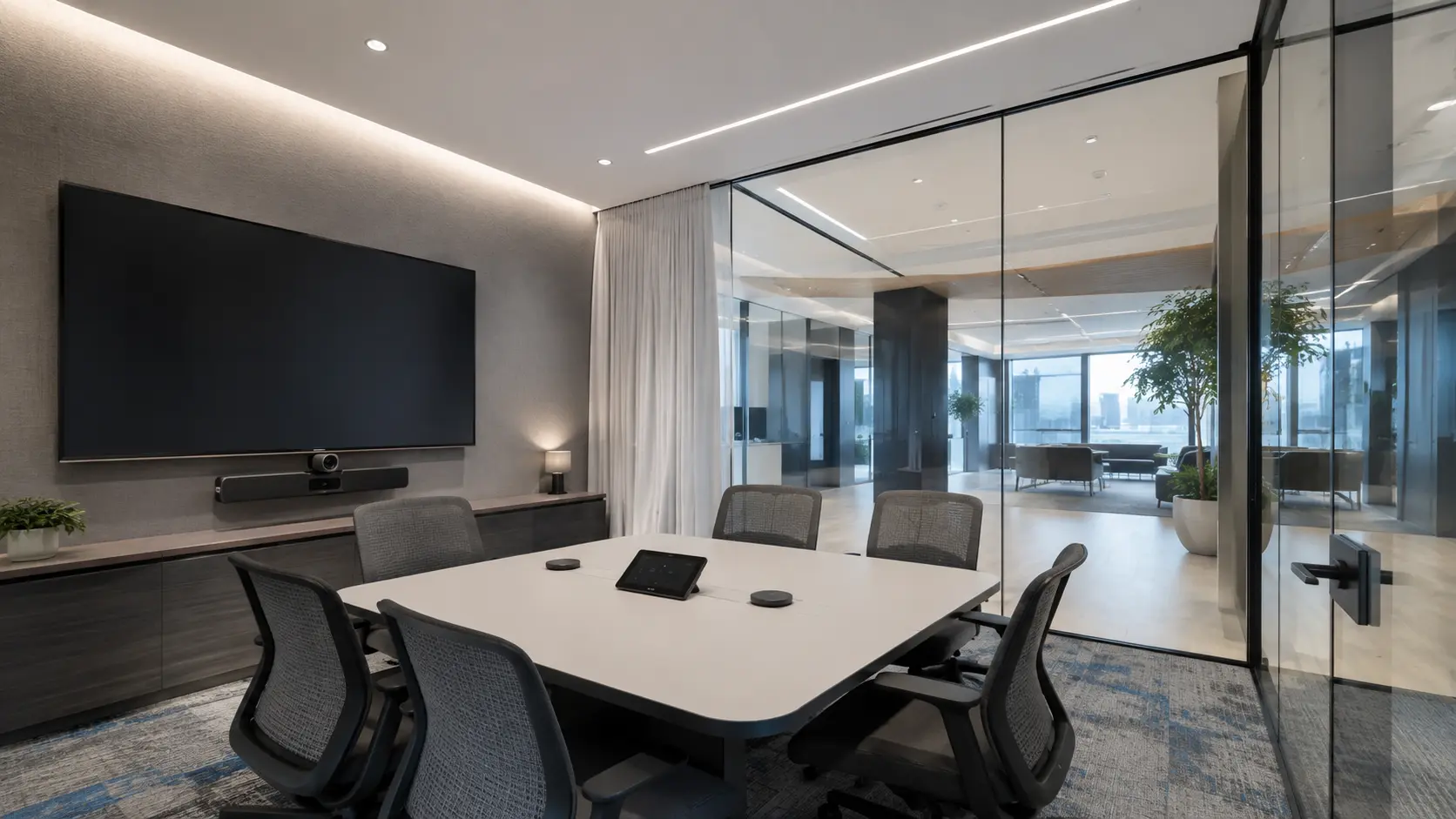
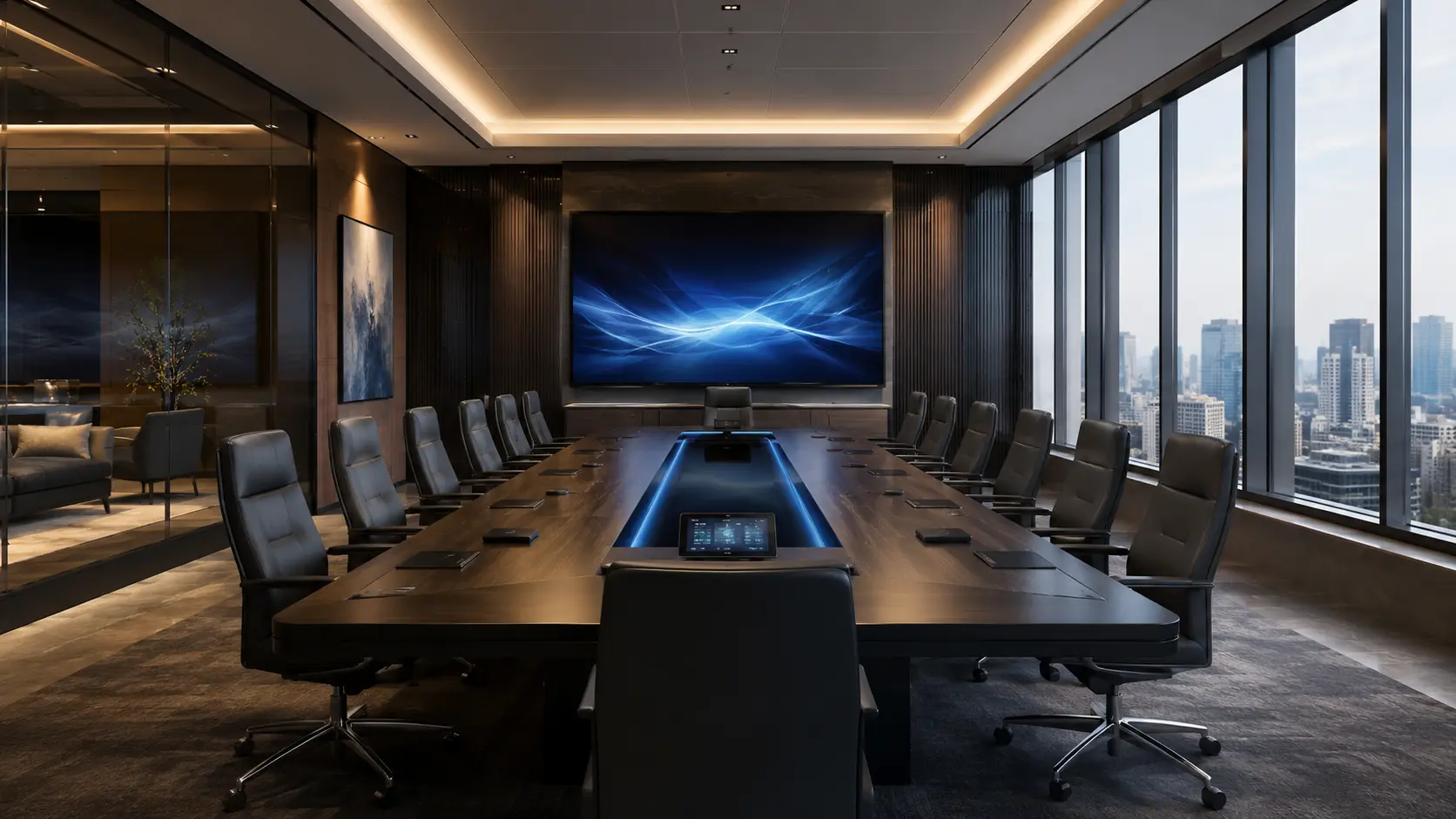
Delivered in real working environments.
Lifecycle support
Technology remains useful after installation.
- Coordinated firmware and platform release management
- Periodic media quality verification
- Room health review and reporting
- Change support when platforms evolve
Procurement and implementation questions
Yes. Rooms can be configured with a primary platform plus supported guest-join paths so external meetings do not require workarounds.
Related solutions
Start a conversation
Planning a new workplace, meeting room or collaboration environment?
Talk with PTNTI about your users, rooms, technology environment and project requirements.